
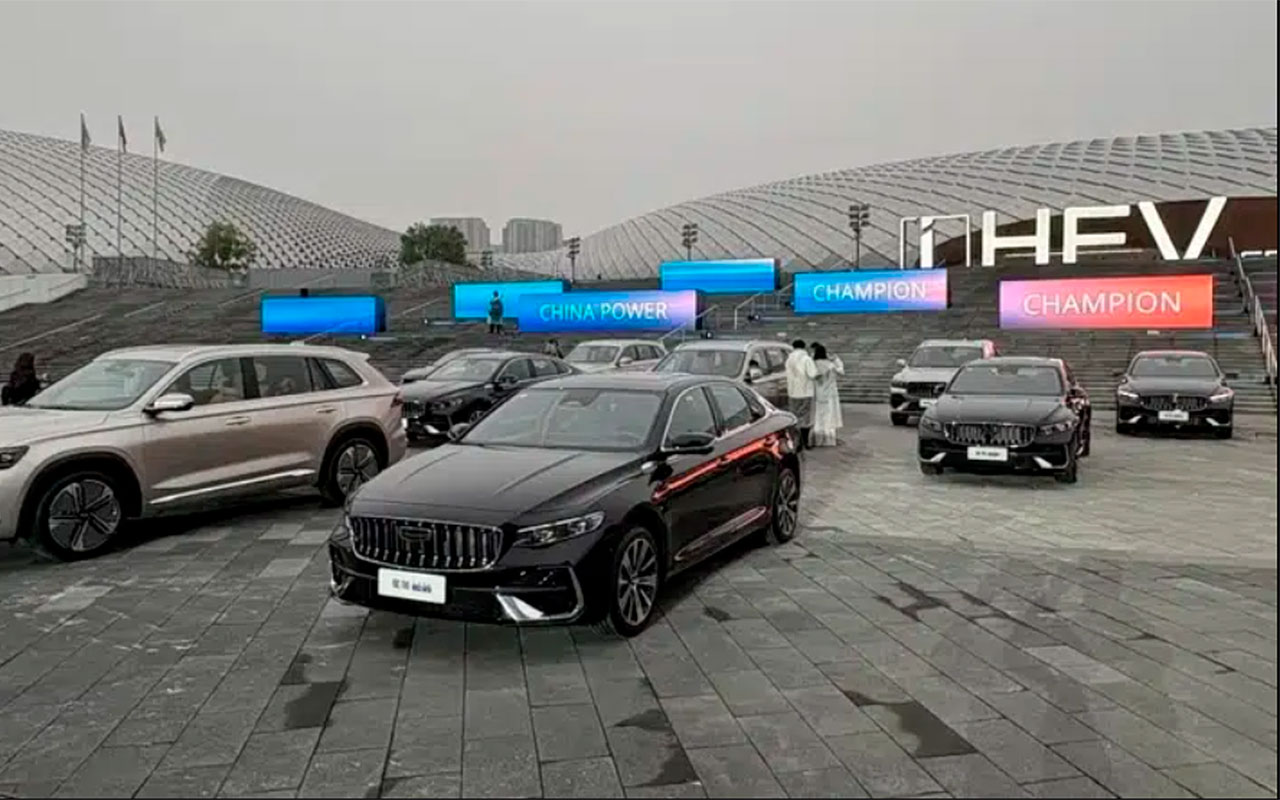

Geely – Recently, the Chinese automaker pulled the wraps off its new i-HEV “Intelligent Energy” hybrid powertrain, promising a jaw-dropping 45 km/l and a Guinness-certified 48.4 % thermal efficiency that could upend the global efficiency leaderboard.
- In short: Geely’s i-HEV rivals the fuel burn of small motorcycles while delivering up to 313 hp.
How the AI-Driven Drivetrain Reaches Motorcycle-Level Economy
The i-HEV pairs 1.5- to 2.0-liter hybrid-dedicated engines with an “11-in-1” electric unit and an AI energy-management brain said to improve overall efficiency by more than 10 %. According to Car and Driver data, today’s best conventional hybrids average roughly 25–30 km/l, giving Geely a sizeable lead on paper.
The system can unleash up to 230 kW (313 hp), allowing crossovers such as the Monjaro to sprint while sipping fuel. Early WLTC figures show 3.98 L/100 km (25 km/l) for the Preface sedan and 4.75 L/100 km (21 km/l) for the larger Monjaro, and Geely says further software updates will push those numbers closer to the headline 45 km/l in lighter models due in 2026.
“The technology achieves 48.4 % thermal efficiency, one of the highest ever recorded for a series-production combustion engine, certified by Guinness World Records,” Geely stated.
Why This Record Matters in the Global Hybrid Race
With Chinese incentives tilting away from plug-ins and battery costs still stubbornly high, full hybrids are regaining favor. Toyota moved 4.4 million hybrids in 2025—about 42 % of its sales—while the International Energy Agency forecasts worldwide hybrid deliveries could top 9 million units in 2027, nearly doubling 2023 volumes.
Geely’s early-2026 rollout across high-volume models such as Emgrand sedans and Boyue SUVs positions the brand to ride that wave. Smaller battery packs (1–2 kWh) mean lower rare-earth demand and price exposure, and Geely is hedging further by investing in alternative fuels like methanol, touted by chairman Li Shufu for its superior energy density.
What do you think? Could a 45 km/l family car change your next-car checklist? For more industry insights, visit our dedicated Auto section.