
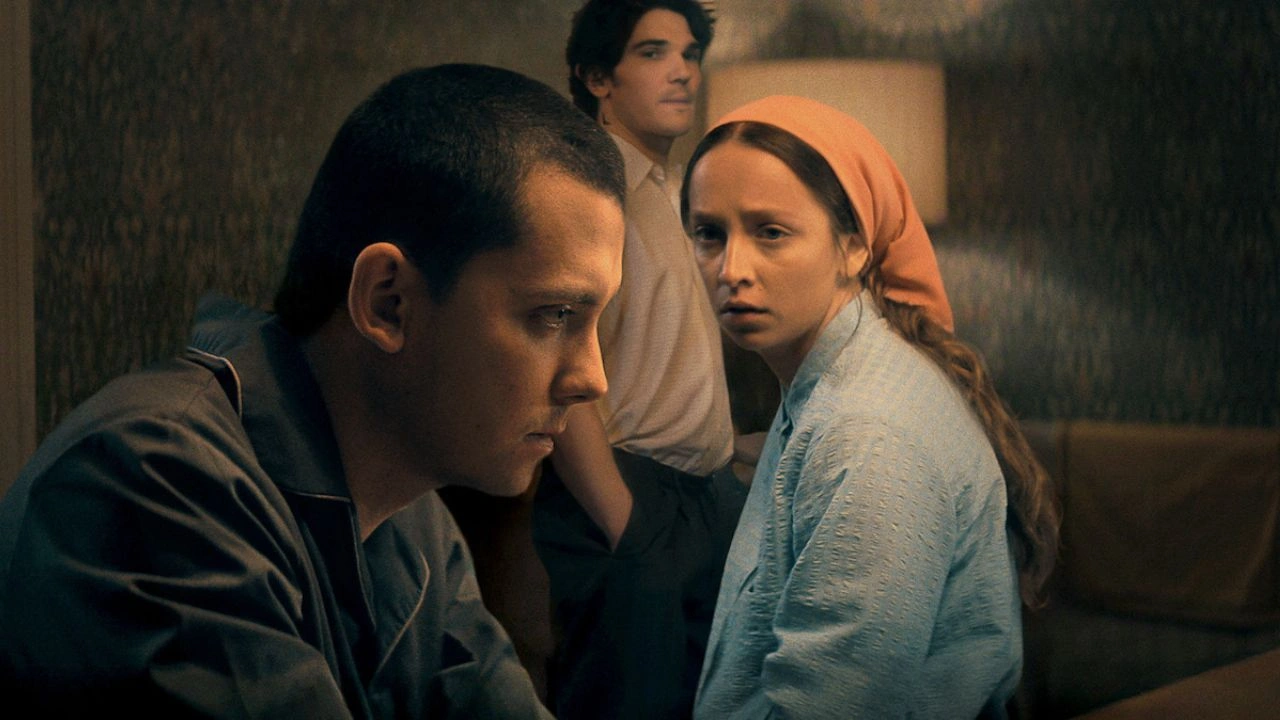

Sem Salvação - The six-episode British thriller recently arrived on Netflix as a compact, unsettling study of how faith can become a mechanism of control, with immediate consequences for anyone trapped inside its rules.
- In short: A child’s disappearance forces Rosie to confront a closed congregation where obedience is enforced as divine order.
Power, isolation and the slow creep of control
The series, created by Julie Gearey, centers on Rosie (Molly Windsor), her husband Adam (Asa Butterfield) and their daughter Grace within a closed group known as “the chosen.” The drama prioritizes everyday repression over spectacle, turning routine rules into instruments of domination. For broader context on how modern dramas treat closed communities, see coverage by The Hollywood Reporter.
A turning point comes when Grace vanishes during a storm and is briefly rescued by Sam (Fra Fee), whose arrival destabilizes Rosie’s certainty and the congregation’s authority.
"the greatest danger is not in dramatic explosions, but in the normalization of submission."
Context, craft and why it matters
Gearey based the story on testimonies from ex-members of UK sects, which helps the show avoid melodrama and instead emphasize plausibility. Christopher Eccleston and Siobhan Finneran underpin the community’s silent surveillance while Windsor’s restrained performance maps a believable slide from compliance to doubt.
Sem Salvação succeeds when it treats faith as a social technology—rules presented as sacred that justify control, punishment and the shrinking of private life. Its deliberate pace can feel slow, but that rhythm is part of the design: it lets the viewer inhabit the sense of entrapment the characters endure.
What do you think? Will you watch Sem Salvação to see how Rosie responds to the rupture of her world? For more on similar titles and reviews, check out our CineFoco section.