
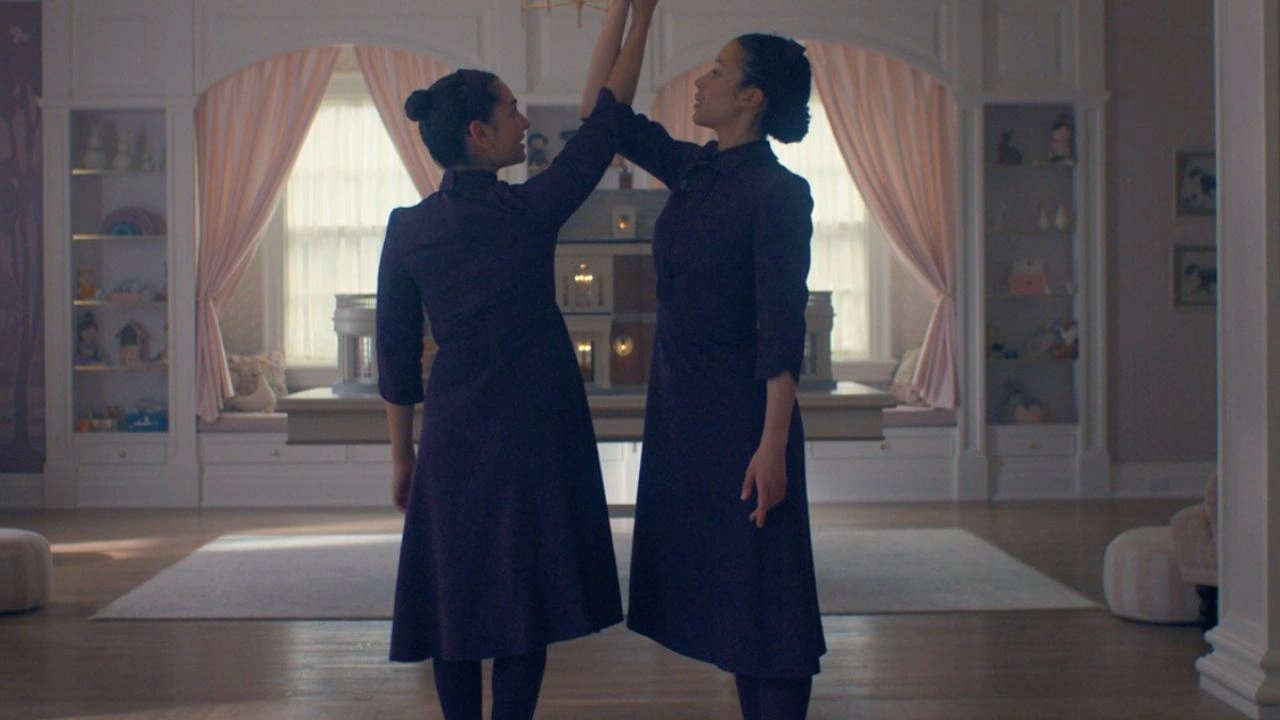

Disney+ - The fifth episode of The Testaments: The Daughters of Gilead, titled “Ball”, recently strips away any ceremonial gloss to reveal one of Gilead’s cruellest systems: a debutante-style event repurposed as a market where girls are paraded and assigned into forced marriages under the guise of honor and tradition.
- In short: Episode 5 turns a coming-of-age ball into a public catalogue for commanders to choose wives, exposing both systemic control and emergent resistance.
The ball exposes Gilead’s marriage market
The episode stages the dance as an institutionalized rite that sexualizes adolescence and treats young women as commodities. Agnes is pushed into this spectacle even as she remains emotionally raw, making clear that personal suffering is irrelevant to the regime’s social function. Critics have long pointed out how Gilead masks coercion with ritual — see coverage at The Hollywood Reporter for broader analysis of the franchise’s themes.
Scenes that transform ceremony into selection—where commanders scan and choose—force viewers to confront how normalized traditions can conceal structural violence.
"Agnes understands there, definitively, that she is not seen as a person but as a reproductive and social piece."
Context and impact
The episode also zooms in on the bodily politics of Gilead: Hulda manages to induce menstruation after a herbal attempt while Shunammite collapses, underscoring how even biological milestones are commodified. Becka’s drunken confession that she is in love with Agnes adds a private risk that could mean immediate destruction in Gilead, while Garth’s role shifts from presumed bystander to confirmed Mayday operative—a revelation that reframes the episode as both a portrait of control and a pivot toward escape.
Rooted in Margaret Atwood’s world-building (The Handmaid’s Tale originates in her 1985 novel), the series leans on quiet, everyday cruelties rather than spectacle; “Ball” is effective because it exposes how ordinary rituals sustain oppression and where small cracks in the system offer real stakes for resistance.
What do you think? Does the episode succeed in showing how ritual becomes repression, or does the overt staging risk melodrama? For more details, check out our specialized section.