
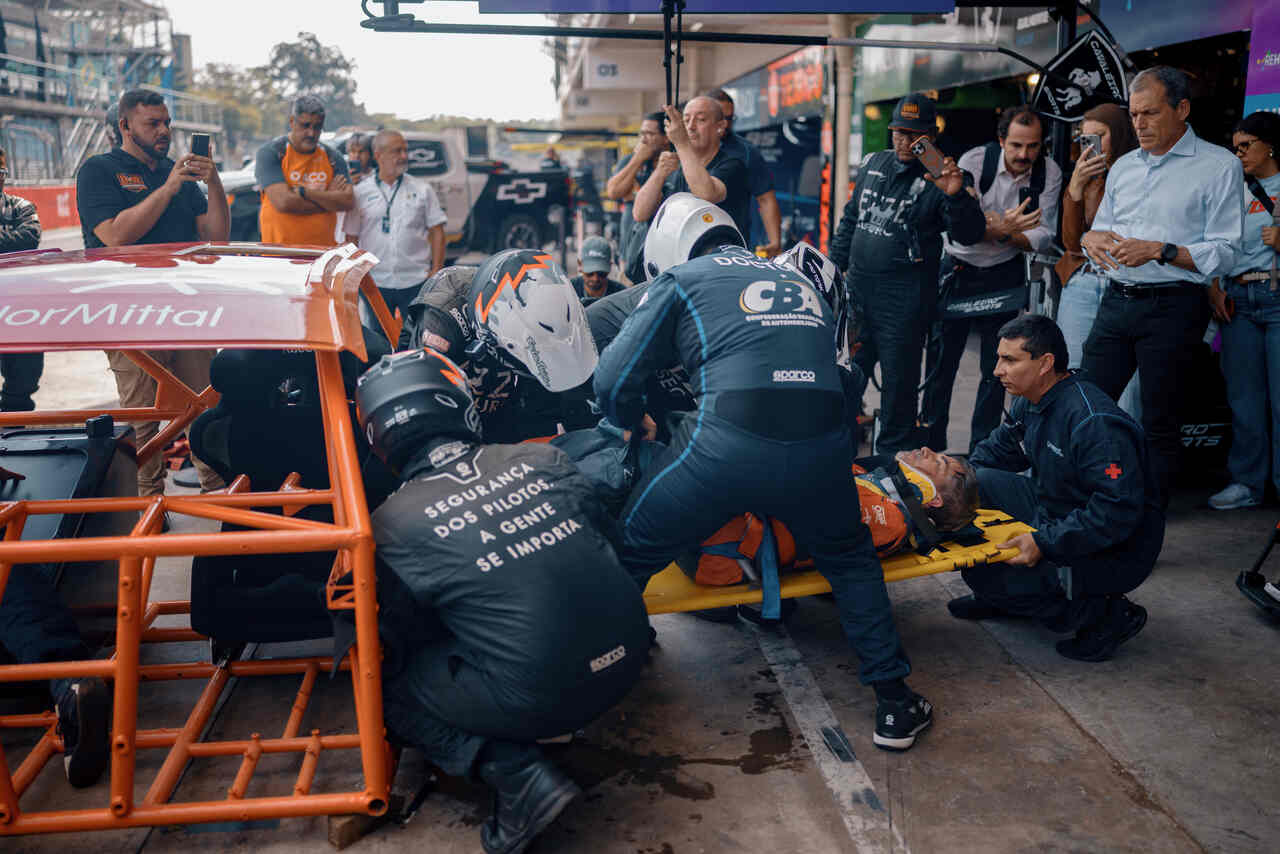

Stock Car - On April 23 at Autódromo de Interlagos, the series showcased technical safety upgrades and revealed commercial gains since Grupo Veloci's 2020 acquisition, signaling a shift that affects fans, sponsors and broadcasters alike. TRANSMISSÃO: Globo | Band.
- In short: Stock Car has doubled its sponsor base, increased media value from 1 billion in 2024 to 2.1 billion in 2025, and expanded its audience — notably among young fans and women (around 30%).
Why the safety leap matters — and who is behind it
The event at Interlagos put the new SNG01 and a pilot-rescue simulator center stage, underscoring a series-wide push on safety led by Dr. Dino Altmann, Stock Car’s chief medical officer and former president of the FIA medical commission. These measures include a strengthened chassis, intrusion-resistant materials and NASA-applied thermal insulation in cockpits — technical steps aligned with global motorsport standards set by the FIA.
Autódromo José Carlos Pace remains a high-visibility stage: updates presented there accelerate trust among teams and sponsors, and they reduce the reputational risk of serious incidents that can undermine commercial growth.
“Our involvement is linked to the purpose of developing intelligent steel for people and the planet. It is a technological partnership that goes beyond brand exposure... and, mainly, increases safety,” said João Bosco Reis da Silva, head of ArcelorMittal’s investments in Stock Car.
Commercial momentum, audience shift and the broadcast mix
Under CEO Lincoln Oliveira and Grupo Veloci, Stock Car has transformed into a business-and-entertainment platform. Oliveira cites a jump from eight to more than 20 core sponsors and an ecosystem of over 250 companies supporting teams and events. Media value rose from 1 billion in 2024 to 2.1 billion in 2025, and the series broadened distribution — maintaining presence on Band while expanding digital streaming partnerships.
That distribution strategy appears linked to demographic gains: stronger engagement among 18–30-year-olds and roughly 30% female representation in the audience, which changes how sponsors activate on-site and online.
What do you think? Will these safety and commercial moves make Stock Car Brazil’s dominant motorsport product? For more details, check out our specialized section.